Why So Many Americans Feel Tired and Can’t Lose Weight — Even Eating Less
Millions of Americans are doing “everything right” and still feel exhausted. They cut calories, try to eat healthier, walk more, and yet the scale barely moves. Worse than that, the constant fatigue never seems to go away. This frustrating cycle has led many people to believe the problem is a lack of discipline or willpower — but new research suggests something very different may be happening inside the body.
👉 Clique aqui para descobrir o que pode estar realmente diminuindo sua energia e seu metabolismo

O problema pode não ser calorias ou exercícios.
For years, weight management and energy have been explained using a simple formula: eat less and move more. While that matters, it doesn’t explain why some people feel drained even after resting, or why fat loss becomes harder with age. Scientists are now pointing to a deeper issue — how efficiently the body produces energy at the cellular level.
Every movement, thought, and metabolic process depends on cellular energy. When this system becomes inefficient, the body tends to conserve energy, store fat, and reduce overall vitality — regardless of diet efforts.
👉 Click here to learn why energy production matters more than most people realize.
What Happens When Cellular Energy Slows Down
Inside every cell are structures called mitochondria, often referred to as the body’s “power generators.” Their job is to convert food into usable energy. Over time, stress, aging, poor sleep, and environmental factors can reduce how well this process works.
When mitochondria underperform, common signs begin to appear:
- Constant tiredness, even after sleep
- Difficulty losing weight
- Mental fog and low motivation
- Afternoon energy crashes
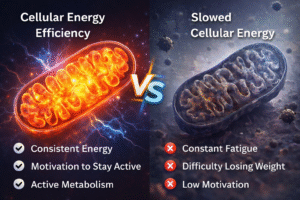
This explains why many people feel stuck despite trying harder — the issue isn’t effort, it’s efficiency.
👉 Click here to see how mitochondrial health affects metabolism.
Why Stimulants Don’t Fix the Problem
Most energy products rely on caffeine or harsh stimulants. While these can create a temporary boost, they don’t improve cellular energy production. In fact, many people experience stronger crashes later in the day, reinforcing the cycle of fatigue.
Instead of forcing the nervous system into overdrive, experts suggest supporting the body’s natural energy systems so cells can function more efficiently on their own.
👉 Click here to see the difference between real energy support and stimulants.
A New Approach Americans Are Exploring
Because of this shift in understanding, more Americans are turning to supplements designed to support mitochondrial and metabolic function rather than quick fixes. These formulas focus on helping cells convert nutrients into energy more effectively, supporting steady energy, motivation, and metabolic balance over time.

This approach doesn’t promise overnight results — instead, it aligns with how the body naturally restores energy when supported consistently.
👉 Click here to explore a supplement designed to support cellular energy.
Why This Matters for Long-Term Results
When the body produces energy efficiently, everything else becomes easier. People often report better motivation to stay active, improved mental clarity, and more consistent progress with weight management. Rather than fighting the body, this strategy works with it.
It’s not about extreme diets or exhausting routines — it’s about addressing what may be happening at the core of the problem.
👉 Click here to see how Americans are supporting their energy from the inside out.
Final Thoughts
If you feel tired all the time or struggle to lose weight despite your efforts, the issue may not be calories, workouts, or discipline. Cellular energy plays a central role in how the body functions, and supporting it may be the missing piece many people overlook.
As interest grows around mitochondrial health, more people are discovering that sustainable energy and metabolism start at the cellular level — not with stimulants or starvation.
👉 Click here to learn more about supporting cellular energy and metabolism naturally.