
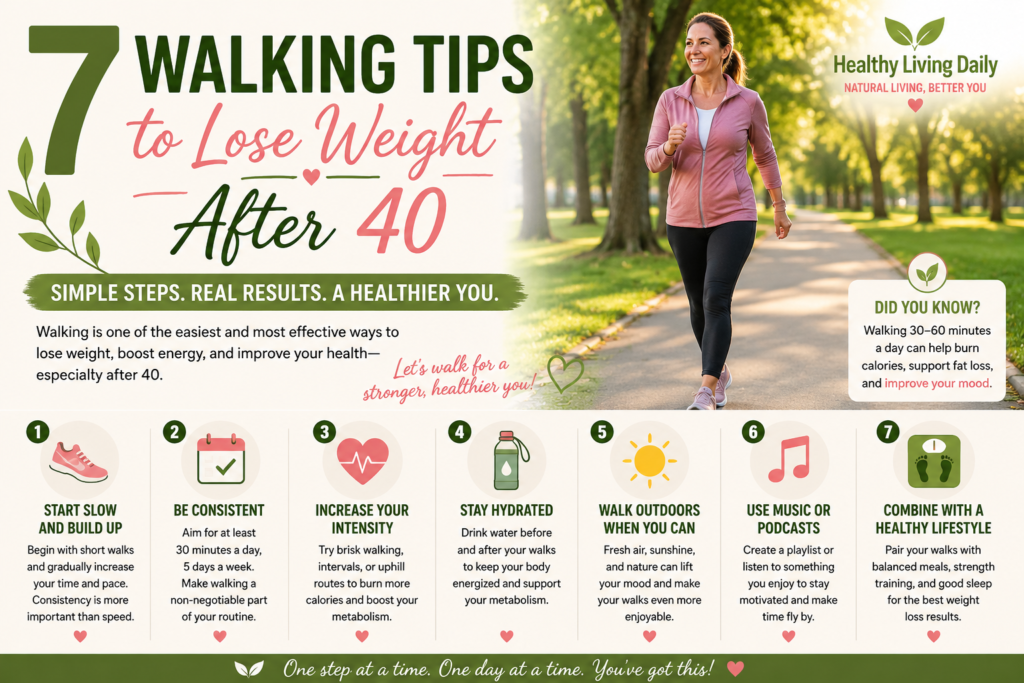
7 Walking Tips to Lose Weight After 40
Walking is one of the simplest ways to become more active and support a healthy lifestyle.
You do not need an expensive gym membership or complicated workout routine to get started. A regular walking habit can help you move more, improve your energy, and support your weight management goals.
If you are over 40, these seven simple tips can help make your walks more effective and enjoyable.
1. Start Slowly and Build Up
If you are not used to walking regularly, start with short walks and gradually increase your time and pace.
Even a 10- or 15-minute walk is a great beginning.
As your body becomes more comfortable, you can slowly increase the duration of your walks.
2. Make Walking a Consistent Habit
Consistency matters more than trying to do an intense workout once in a while.
Aim to make walking a regular part of your week. You might walk before work, during your lunch break, after dinner, or whenever it fits naturally into your schedule.
Choose a routine that feels realistic enough to maintain.
3. Increase Your Intensity Gradually
Once regular walking becomes comfortable, try adding short periods of faster walking.
You can alternate between a comfortable pace and a brisk pace, or choose a route with gentle hills.
These small changes can make your walks more challenging while keeping the activity simple.
4. Stay Hydrated
Remember to drink enough water throughout the day, especially when walking in warm weather or for longer periods.
Taking a water bottle with you can make it easier to stay hydrated.
Good hydration is an important part of supporting your overall health and staying energized during physical activity.
5. Walk Outdoors When You Can
Walking outdoors can make exercise feel less like a chore.
Parks, quiet neighborhoods, walking trails, and other pleasant outdoor spaces can make your routine more enjoyable.
Fresh air, sunlight, and a change of scenery can also make it easier to stay motivated.
6. Listen to Music or Podcasts
If you find walking repetitive, make it something you look forward to.
Create a playlist with your favorite songs or listen to a podcast, audiobook, or other content you enjoy.
Just remember to stay aware of your surroundings, especially when walking near traffic or in unfamiliar areas.
7. Combine Walking With Other Healthy Habits
Walking works even better as part of an overall healthy lifestyle.
Pair your regular walks with balanced meals, adequate sleep, strength exercises, and other habits that support your well-being.
You do not need to make dramatic changes. Small improvements in several areas can add up over time.
How Long Should You Walk?
There is no single perfect walking routine for everyone.
If you are just starting, focus on building consistency rather than worrying about reaching a specific number of minutes or steps.
As your fitness improves, you can gradually increase your walking time, distance, or pace according to what feels comfortable for you.
Final Thoughts
Walking is simple, accessible, and easy to adapt to different lifestyles.
Start with what feels manageable, make it consistent, and gradually challenge yourself as your body becomes stronger.
You do not need to take giant steps to make progress. Sometimes, one small step at a time is all you need. 🌿
Keep moving, stay patient with yourself, and remember that healthy living is a journey—not a race.