
7 Walking Mistakes That Can Slow Weight Loss After 40
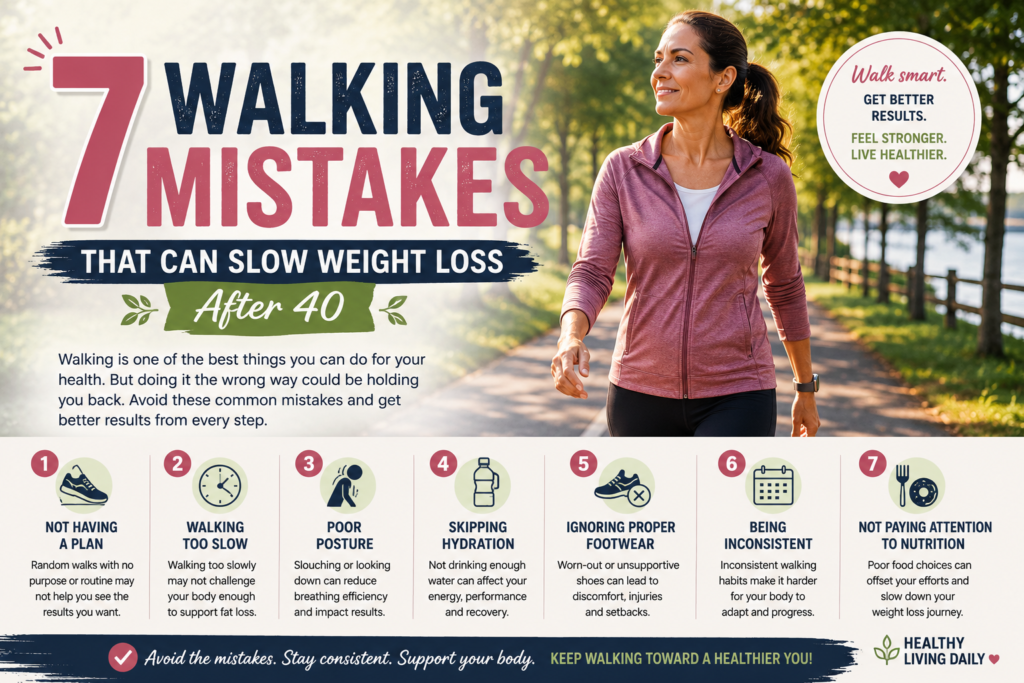
Walking is one of the simplest and most accessible ways to stay active, especially after 40. It does not require an expensive gym membership or complicated equipment, and it can easily become part of your daily routine.
But simply walking more is not always enough to support your weight loss goals. Some common habits may make your walks less effective or make it harder to stay consistent over time.
The good news is that small adjustments can make a meaningful difference. Here are seven walking mistakes that may slow your progress and what you can do instead.
1. Walking Without a Clear Goal
Going for a walk is always better than staying inactive, but having a simple goal can help you stay more consistent.
You do not need to focus only on calories or the number on the scale. Your goal could be walking for 20 minutes, reaching a certain number of steps, improving your pace, or simply creating a daily movement habit.
Try setting realistic goals that fit your current lifestyle. Starting small and staying consistent is often more helpful than creating an ambitious routine that is difficult to maintain.
2. Always Walking at the Same Easy Pace
A comfortable walk is great, especially when you are just starting. However, walking at exactly the same slow pace every day may eventually stop feeling challenging for your body.
As your fitness improves, consider adding short periods of faster walking. You might walk comfortably for a few minutes and then increase your pace for one or two minutes before slowing down again.
This simple variation can make your walks feel more engaging without turning them into an exhausting workout.
Always listen to your body and choose a pace that feels appropriate for your current fitness level.
3. Forgetting to Stay Hydrated
Hydration is easy to overlook, especially during shorter walks. However, drinking enough water throughout the day can support your overall well-being and help you feel more comfortable when exercising.
You do not need to carry a large bottle everywhere, but developing a regular hydration habit can be helpful.
Try drinking water before your walk and paying attention to how you feel afterward, especially on warm days or during longer walks.
Small healthy habits often work best when they become part of your routine rather than something you have to constantly remember.
4. Ignoring Your Walking Posture
The way you walk can affect how comfortable and enjoyable your walks feel.
Try to keep your head up, relax your shoulders, and avoid constantly looking down at your phone. Let your arms move naturally and aim for a comfortable, upright posture.
You do not need to overthink every movement. The goal is simply to walk in a way that feels natural and comfortable for your body.
Good posture can also help you stay more aware of your surroundings and make your walking routine feel more confident and purposeful.
5. Being Too Inconsistent
One long walk once in a while may feel productive, but consistency is usually more important than occasional intense efforts.
Walking for 15 or 20 minutes several times a week can be easier to maintain than trying to complete an extremely long walk only when you feel motivated.
Life gets busy, and some days will not go as planned. Instead of thinking that a missed walk means you have failed, simply return to your routine the next day.
Progress does not require perfection. It requires the ability to keep going.
6. Expecting Walking to Do Everything
Walking can be a valuable part of a healthy lifestyle, but it works best when combined with other supportive habits.
Your food choices, sleep, stress levels, hydration, and overall daily movement can all influence how you feel and support your long-term goals.
Instead of expecting one habit to completely transform your results, think about building a lifestyle made of several small, sustainable choices.
A balanced breakfast, a short walk, enough water, and better sleep may seem simple individually, but together they can create a healthier routine.
7. Ignoring What Your Body Is Telling You
Motivation is important, but pushing through significant pain or extreme fatigue is not always the answer.
Pay attention to how your body feels during and after your walks. Some days you may feel energetic and ready to walk longer, while other days you may need a slower pace or extra rest.
Learning to adjust your routine can help make walking a sustainable habit rather than something you associate with pressure or exhaustion.
The goal is not to walk perfectly. The goal is to create a routine that supports your health and fits your life.
Final Thoughts
Walking can be a powerful habit for women over 40 who want to become more active and support a healthy weight loss journey.
You do not need complicated workouts or extreme routines to get started. By avoiding these common mistakes and focusing on consistency, comfort, and realistic goals, you can make your walks more enjoyable and sustainable.
Remember that lasting progress usually comes from small habits repeated over time.
Walk at your own pace. Stay consistent. Listen to your body. And allow yourself to celebrate every step forward.
Small changes can lead to meaningful progress — one walk at a time.
Looking for Extra Support on Your Wellness Journey?
Healthy habits should always come first. But some women also like to explore additional wellness products that may complement a healthy and balanced lifestyle.
Java Burn is a wellness product designed to be added to your daily coffee routine. If you’re curious and would like to learn more about the ingredients, product details, and how it works, you can explore the official website below.